Writer-director Yen Tan talks Pit Stop

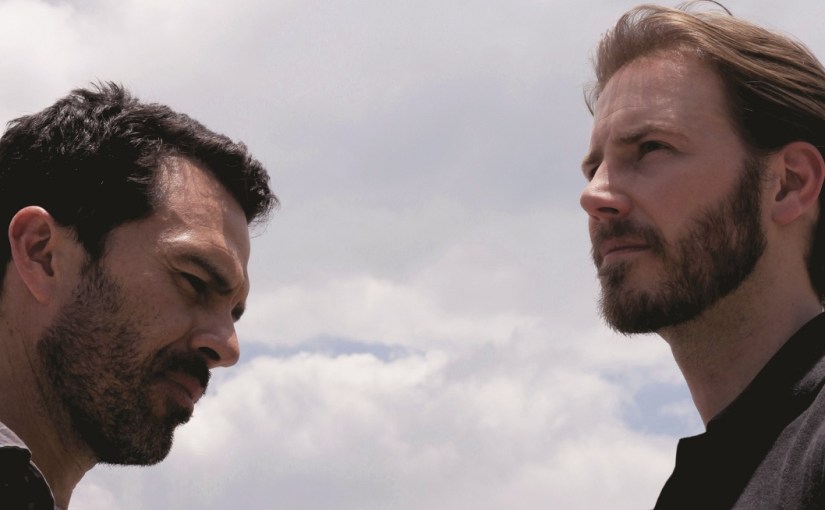
Pit Stop takes a subtle and eloquent approach in telling the parallel stories of two gay men in a small Texas town. There’s Gabe (Bill Heck): a contractor who’s getting over an ill-fated affair with a married man and finds solace in the relationship he still harbors with his ex-wife, Shannon (Amy Seimetz), and their daughter, Cindy (Bailey Bass); and there’s Ernesto (Marcus DeAnda): a Hispanic lumber yard worker in the midst of splitting up with his live-in boyfriend, Luis (Alfredo Maduro), as he receives news from the hospital that his former love, Martin (Rob Conner), is in a coma. At the end, when Gabe and Ernesto meet for a one-nighter – having endured all the struggles and heartbreaks and wondering if they’ll ever find love again – they face the possibility that they might just be meant for each other.

As a gay Asian-American filmmaker, I always desire to see a broader and more complex range of LGBT characters in cinema. I’m also drawn to stories that delve into the heart of underrepresented communities. Pit Stop is a character-driven drama that revolves around the lives of two gay characters in a red state small town. In today’s climate where there’s so much discourse over gay rights and marriage equality, Pit Stop is my endeavor in diverting that debate into something less political but more emotionally grounded: the meaning of love, the meaning of family, and the meaning of connection. The playwright Adam Bock once said, “In being specific in my work, that’s how universality happens. Everybody is lonely, everybody is afraid. As artists, as we get more specific, the universe appears.” This is precisely what I seek to achieve with Pit Stop.” – Yen Tan

Photo of writer/director Yen Tan

Q&A with Yen Tan


How did the story come to you?

The idea for Pit Stop came about in 2002 when I was commuting between Dallas and Houston (where my editor was based) for the post-production of my first film, Happy Birthday. I made “pit stops” for gas and coffee in the small towns in between the cities, and I started to think about what it’d be like to live there as a gay man. My curiosity led to some research online, and I corresponded with several gays and lesbians who live in small towns. They were people who chose to be in places that may not be accepting of their lifestyles. Yet, they managed to blend in seamlessly with the rest of their community, holding jobs as conventional as everyone else’s. They were mechanics, teachers, construction workers, business owners, or law enforcement officers.

Nevertheless, these small towners are not as “out” as the average gay urbanite. Being gay is part of their identity, but it’s not necessarily something they’d talk about openly. A few of their close confidants may know, but for the most part, DADT (“Don’t Ask, Don’t-Tell”) is the prevailing attitude. This all brought back another distant memory I had in college. I was studying at Drake University in Des Moines, Iowa and used to frequent a gay bar called The Garden. One cold winter night, I met Larry, a farmer who lived near Ames. Since his place was too far away and I had a roommate in my dorm, we ended up spending the night in his truck at a secluded residential area. He was closeted and had an ex-wife who doesn’t know he’s gay, and they had a kid who was about to attend elementary school.

This provided a foundation for me to work off from, and I started to write the script with Larry’s story as a starting point. Little did I know I was gonna be working on the script for close to ten years, and eventually co-wrote it with David Lowery.


When did you begin production? How long did it take?

We shot the film in Texas – Austin, Bastrop, Dripping Springs, Lockhart – in the summer of 2012. Production took about a month.


Did you face any difficulties in making the film?

It took so long to get the script off the ground, and it was nearly impossible to find financing for the film. I must have shelved the project more than a dozen times. Being accepted by the Outfest Screenwriting Lab in 2009 was certainly a confidence boost, and once we received a production grant from Austin Film Society in 2011, that very quickly led to more grants (i.e. Vilcek Foundation) and funding opportunities.

Casting was occasionally frustrating. There were times where I wondered if I was making the film twenty years ago, where actors would balk at the gay content and gave ridiculous reasons to back out of auditions. There was a nice counterbalance: actors who didn’t care and who responded to the story and characters were incredibly passionate. Production went fairly smoothly, self-inflicted mental torture aside.


What do you want the audience to take from the film?

I wasn’t interested in making anything sensational or had a “message.” My intent with Pit Stop is to always focus on the characters’ humanity and their way of life. My hope is that the integrity of this approach enables the audience to fully empathize with their emotional journeys and their plights in finding, losing, and rediscovering love.

Original Poster Art for Pit Stop

Two men. A small town. A love that isn’t quite out of reach.

In Pit Stop, a perfectly-crafted American drama, openly gay Ernesto (Marcus DeAnda) and closeted Gabe (Bill Heck) grapple with the sad tribulations of being gay in a small, working-class Texas town. This truly uplifting love story, given great critical praise when it first premiered at the Sundance Film Festival, delicately examines male intimacy, the heartache of unsuccessful relationships and the transformative power of love.

Marcus DeAnda and Bill Heck in Pit Stop

“I need to get on with my life,” Ernesto pronounces as he kicks out live-in ex-boyfriend Luis. Macho yet sensitive, Ernesto still carries a hopeless torch for his other ex-lover, Martin. Meanwhile, down-to-earth building contractor Gabe seeks solace with his ex-wife and six year-old daughter while pining over the loss of his relationship with Chuck. Trying to find connection amidst formidable loneliness – this is the story of Ernesto and Gabe.

Bill Heck and Amy Seimetz in Pit Stop

Reminiscent of such classic rural gay love stories as Big Eden and Brokeback Mountain – and showcasing equally accomplished performances from its handsome leads – Pit Stop achieves an understated tone of authenticity rarely seen on screen as it shows us a tender, beautiful slice of gay American life.

Marcus DeAnda in Pit Stop

Watch the trailer for Pit Stop below. The film is now available on Dekkoo.

Watch the trailer for the profoundly moving new short film Louder Than Words

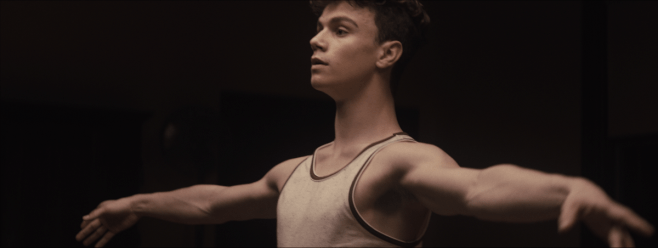
Louder Than Words, written and directed by Julio Dowansingh, is an independent short film that follows a young musician named Ansel (Luke Farley), and his unexpected encounter with Niall (Marty Lauter), an endearing, deaf dancer.

Marty Lauter in Louder Than Words

When forced to share a studio space, artists Ansel and Niall find themselves awkwardly beside each other, performing song and dance respectively. They have an underlying connection, and that is a closeted interest and admiration of each other. While Niall can read lips, an obvious language barrier still stands between him and Ansel.

Luke Farley and Marty Lauter in Louder Than Words

In order to communicate, Ansel and Niall must step out of their comfort zones, because even though they share similar passions and quickly inspire each other, the inevitable risk of miscommunication – both in language and emotion – remains, rendering their hidden affection almost impossible to express. 

Luke Farley in Louder Than Words

The film explores the sheer struggle that queer people often face in a culture that is yet to fully foster accepting spaces for courtship and love. At its core, the story portrays how difficult it can be to communicate romantic interest as a queer person, and in this case, an added impediment of being hearing impaired.

Luke Farley and Marty Lauter in Louder Than Words

Louder Than Words is now available to stream on Dekkoo. Check out the trailer below.

Cinema Spotlight: Bromance

Welcome back to the fall of 1996.

Still from Bromance - Available now on Dekkoo

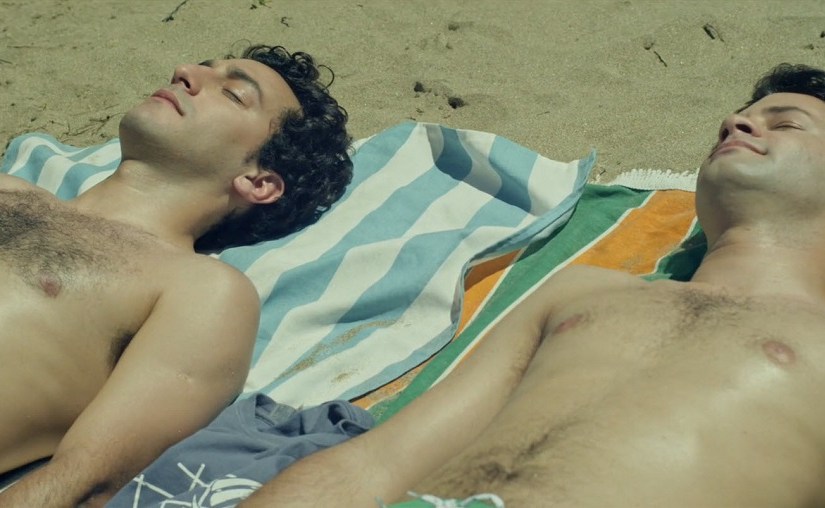
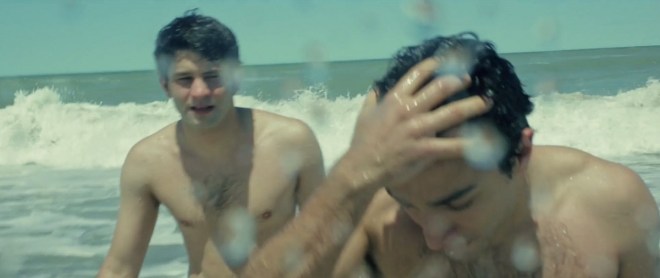
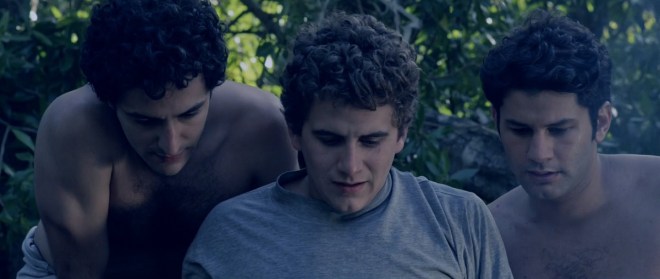
When four friends go on a camping trip in a remote part of Argentina, sexual tensions quickly bubble to the surface. Once in virtual seclusion by the beach, Juli, the only girl of the group, quickly recognizes that the boys seem to have a closer relationship than what she would consider “normal” (it’s only ’96, after all).

Still from Bromance - Available now on Dekkoo

The line between friendship and love fade further for two of the boys in particular as their desire becomes too much to bear. When what started as a simple getaway quickly becomes tinged with sex, romance and conflict, everyone is forced to confront who they really are for the very first time.

Still from Bromance - Available now on Dekkoo

Starring Javier De Pietro, the scrumptious star of Absent and Sexual Tension: Volatile (both of which are also available on Dekkoo), Bromance uses a clever found-footage aesthetic to deliver a thoughtful and supremely sexy meditation on young, burgeoning gay love.

Still from Bromance - Available now on Dekkoo

Bromance is available now on Dekkoo. Watch the trailer below.

Censored Dreams takes an insightful look at filmmaking in the Philippines

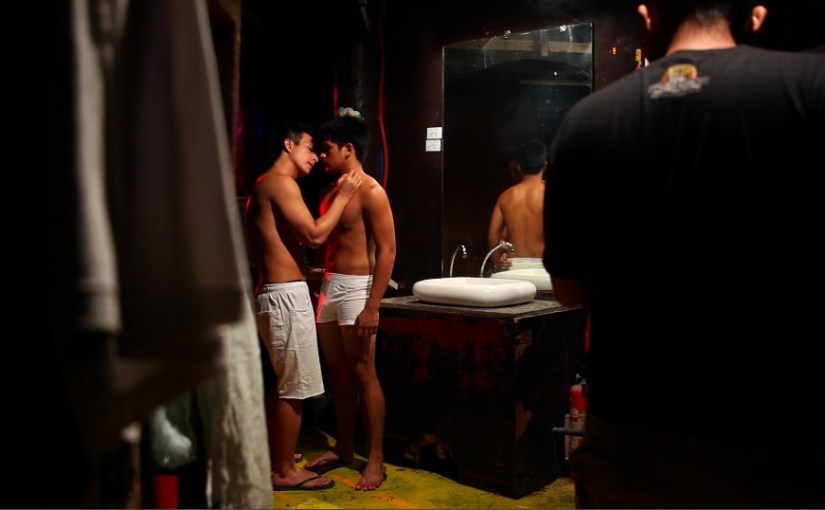
Get an in-depth look into the independent film scene in the Philippines with this sexy and thought-provoking feature from director Joselito Altarejos.

Censored Dreams takes us through the process of making a gay-themed feature film by following the lives of an aspiring actor named Samuel (played by Arjay Carreon) and a struggling filmmaker named Wilfredo (Richard Quan).

Samuel has hung all of his hopes and dreams on becoming an actor. He’s hoping Wilfredo, who has also staked his livelihood on finishing their film, can help make his dreams a reality. Their hopes, unfortunately, are dashed when the Board of Censors assigns their new project an X-rating, which means it will be banned from being shown publicly. Their path toward fame and fortune is suddenly littered with even more obstacles.

Censored Dreams is available now on Dekkoo.

Cinema Spotlight: Teenage Kicks

The scars of our youth shape the adults we become.

Miles Szanto and Daniel Webber in Teenage Kicks

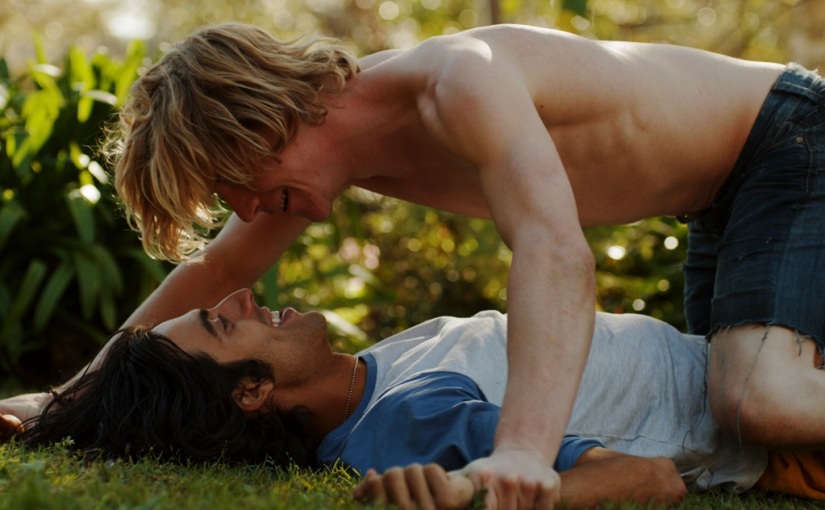
In the riveting Australian drama Teenage Kicks, angst-ridden seventeen-year-old Miklos (Miles Szanto) makes plans to escape his migrant family and run away with his best friend and secret crush Dan (cutie-pie Daniel Webber, hot off his star-making turn as Lee Harvey Oswald in the miniseries “11.22.63” and his regular role on “The Punisher”).

Miles Szanto and Daniel Webber in Teenage Kicks

Miklos’s dreams are dashed after the accidental death of his older brother Tomi (Nadim Kobeissi). Only he knows the events that led to this tragedy. Suddenly, he is forced to navigate his guilt, as well as his explosive sexuality, in order to find the man he will become.

Miles Szanto and Daniel Webber in Teenage Kicks

Written and directed by Craig Boreham, who recently made MTV’s list of “hot filmmakers to watch,” Teenage Kicks is a smart and sexy drama that has earned rave reviews around the globe. Empire magazine labeled it “a debut not to be missed.”

Miles Szanto in Teenage Kicks

Teenage Kicks is now available on Dekkoo.

Take a trip back to 1992

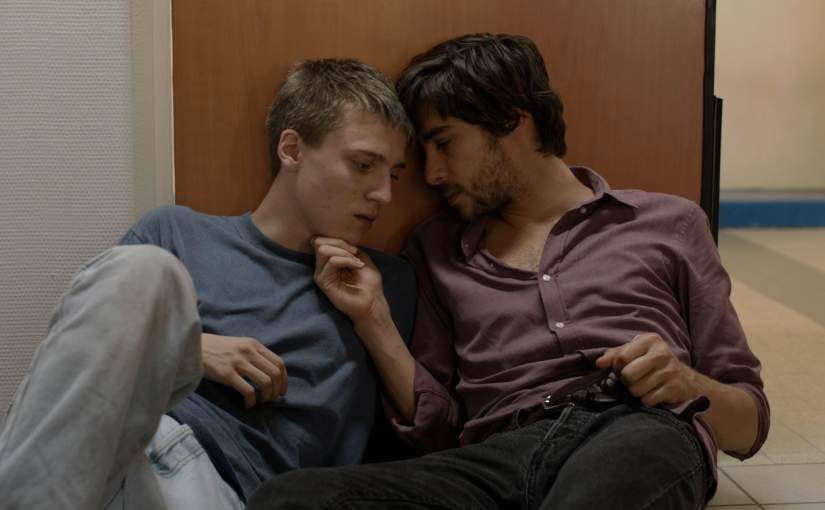
The new 25-minute short film 1992 follows Martin (Louis Duneton), a seventeen-year-old student who and spends the majority of his time behind a video camera, recording everything everything that catches his eye. One day, he meets an older man named Dominique (Matthieu Dessertine), who works as a watchman at his school. After their first encounter, Martin seems to only have eyes for his new crush.

Louis Duneton and Matthieu Dessertine in 1992

Examining infatuations, the frustrations of adolescence, father-son conflict, first-time sexual experiences and the way being a gay teen has changed from the early ’90s to now, director Anthony Doncque’s period piece 1992 is provocative and brutally honesty. The film depicts a warts-and-all sex scene between a teen and a twenty-something that should ring familiar to any or us who came of age pre-internet.

Louis Duneton and Matthieu Dessertine in 1992

Louis Duneton and Matthieu Dessertine give committed, completely fearless performances and Doncque stands out as a talented director worth keeping an eye on.

You can watch 1992 now on Dekkoo. Just be warned: the film features scenes of graphic sexuality. Viewer discretion is advised.

New Series: Single Record

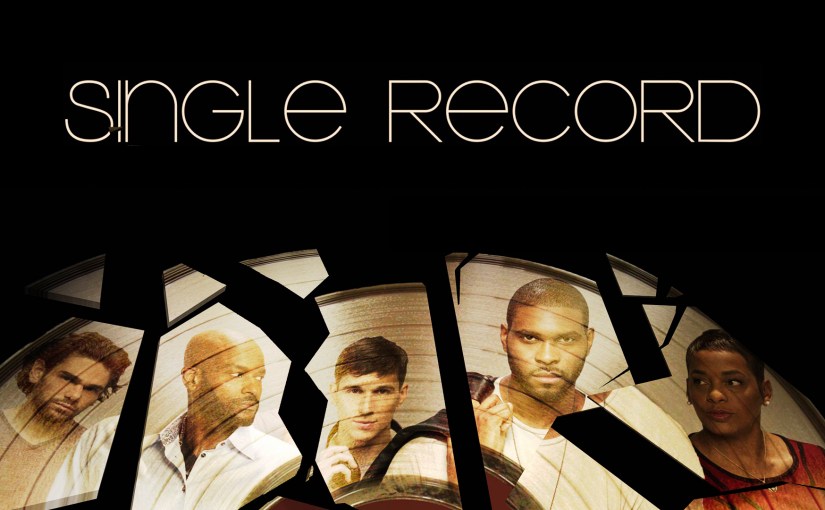
Single Record is a hip-hop series shot as a narrative documentary. The series tells the story of Aaron (Nelson Moses Lassiter) a young rapper fighting through depression as he breaks through in the music industry while coming to terms with his sexuality. As his inner circle witnesses his unraveling, they must work behind the scenes to save his stalling career and ultimately his life, at the same time they manage the fallout in their own personal lives.

The show is designed to illustrate how people can often ignore calls for help and not realize something is wrong until its too late. Single Record is told through the perspective of Aaron’s friends. Each one of them have a different idea of what is going on and each perspective has some truth. The whole truth is revealed by combining all the perspectives. The idea of perspective is to illustrate that we are often unaware how our decisions and actions impact other people and their actions.

“I wanted to create a show that touches on sexuality, identity and self acceptance. I used Hip hop because it is a genre that has strong views on sexuality. I wanted to show the impact these views can have on someone’s life and hopefully change the way people think,” said Lassiter, the show’s creator and star. “As a gay black man who is also a rapper, I deal with these issues and I wanted to create a world that shows what others like me have to go through and ultimately encourage others to accept themselves and others.”

The first six episodes of Single Record are available to stream now on Dekkoo.

Now Available: In the Family

In the Family takes place in the small town of Martin, Tennessee, where Chip Hines (Sebastian Brodziak), a precocious six year old, has only known life with his two dads, Cody and Joey (Trevor St. John and writer/director Patrick Wang). And a good life it is. When Cody dies suddenly in a car accident, Joey and Chip struggle to find their footing again. Just as they begin to, Cody’s will reveals that he named his sister as Chip’s guardian. The years of Joey’s acceptance into the family unravel as Chip is taken away from him. In his now solitary home life, Joey searches for a solution. The law is not on his side, but friends are. Armed with their comfort and inspired by memories of Cody, Joey finds a path to peace with the family and closer to his son.

Wildly acclaimed by critics and in-the-know audiences for his work on this film – as well as the recent duology A Bread Factory, Part One and A Bread Factory, Part Two – writer/director Patrick Wang is one of the most thoughtful, talented and ambitious indie filmmakers most people aren’t familiar with yet.

The late, great Roger Ebert said of In the Family, “I was completely absorbed from beginning to end. What a courageous first feature this is, a film that sidesteps shopworn stereotypes and tells a quiet, firm, deeply humanist story about doing the right thing. It is a film that avoids any message or statement and simply shows us, with infinite sympathy, how the life of a completely original character can help us lead our own.”

In the Family is now available to stream on Dekkoo. Check out the trailer below.

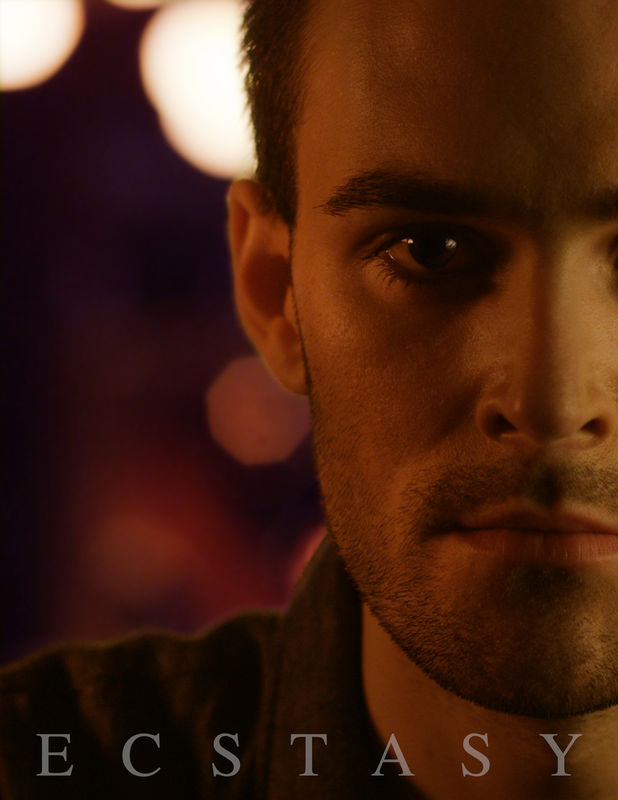
It only takes four minutes and forty-two seconds to reach Ecstasy

He would do anything to be touched by his former lover once more… ANYTHING.

Writer-director-star Kyle Reaume’s four minute and forty-two second short film Ecstasy is an exploration of the coalescence of love and violence. Playing out in slow motion, with no discernible dialog, the film introduces us to an attractive young man (Justin Miller) sitting alone at the bar. Across from him, he spots an old flame (Harrison Reynolds). Though we know pretty much nothing about their relationship, it’s safe to assume that things didn’t end well.

Reaume juxtaposes one of the couple’s happiest moments with the immensely queasy confrontation that is about to unfold. Ecstasy packs a powerful punch (quite literally) into a very short run time.

You can watch Ecstasy now on Dekkoo and make sure to check out Kyle Reaume’s other available short film, What About Shelley, while you’re at it!

ecstasy cover