The Short Films of Miguel Lafuente

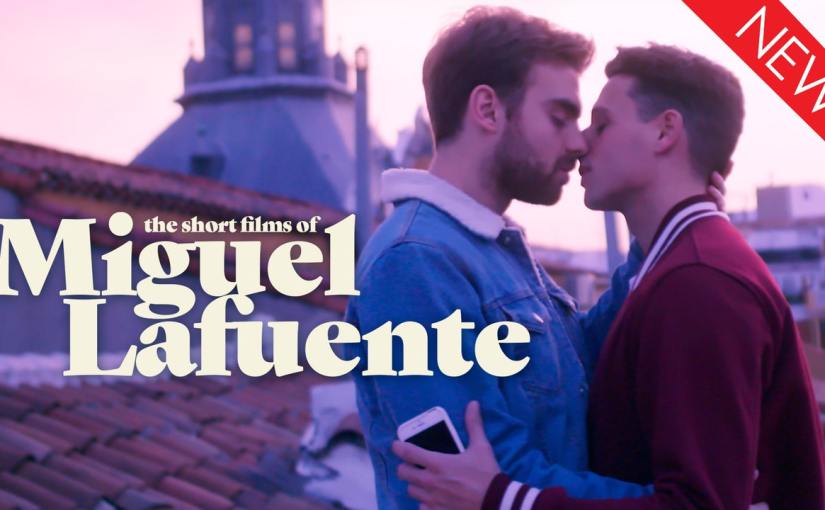
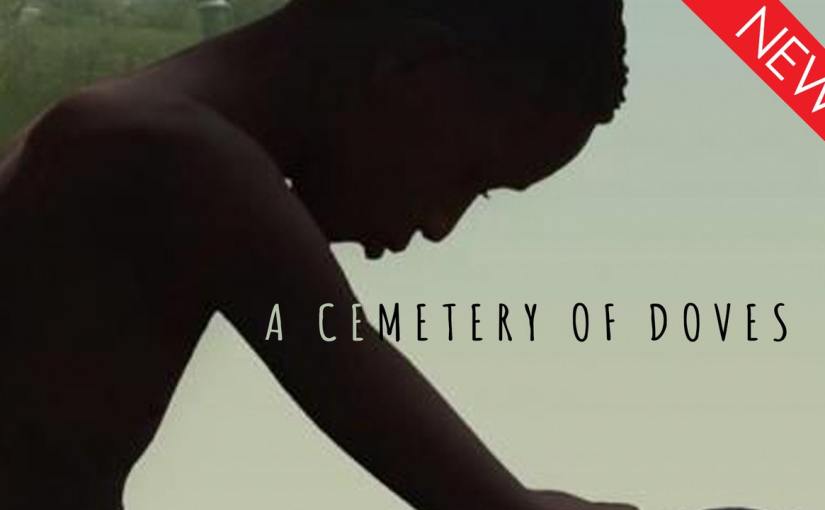
Up-and-coming queer director Miguel Lafuente was born in Madrid. After studying film in the United States, Lafuente returned to Spain to start his own production company to produce queer cinema and music videos. These three short films explore dating, romance, and family dynamics.

Guillermo on the Roof follows an attractive young man (Javier Amann) who tries to fix his romantic life by making a film about it. Through the process, he will discover another reality through Samir (Anuar Beno), a Syrian refugee, who will make him realize the true superficial nature of his issues.

In Mario, Kike and David, two men (Almagro San Miguel and Gustavo Rojo) hook up after meeting on a dating app. What initially was never meant to be more than a one-night stand will turn into something else, in spite of their different ways of viewing their bisexuality – and how they both cope with it in their respective social circles.

In the final short of the bunch, My Brother, A family tragedy forces Alberto (Álvaro de Juan) to come back to his oppressive hometown in Spain from Berlin, where he has a free life working as comic illustrator.

Take a deep dive into The Short Films of Miguel Lafuente – now available on Dekkoo.

The director of Run Lola Run explores throuplehood in the German drama 3

From Tom Tykwer, the director behind Babylon Berlin, Cloud Atlas and Run Lola Run, 3 follows Hanna and Simon (Sophie Rois and Sebastian Schippe), a couple in their early forties who live together in Berlin.

With their twentieth anniversary looming, they both become restless despite being truly and deeply in love. Unbeknownst to one another, they separately become acquainted with Adam (Devid Striesow), an attractive younger man, and fall in love with him.

Inspired by, yet clearly not, the typical 1930’s rom-com romp, this reinvention of those classic films, combined with with Tykwer’s sleek direction, offers up a playful reinterpretation: an intellectual study of a modern couple looking for redefinition in a world of absolutes.

Watch the trailer for 3 below. The film is available now on Dekkoo.
George Takei narrates the feel-good mountaineering doc Who’s on Top

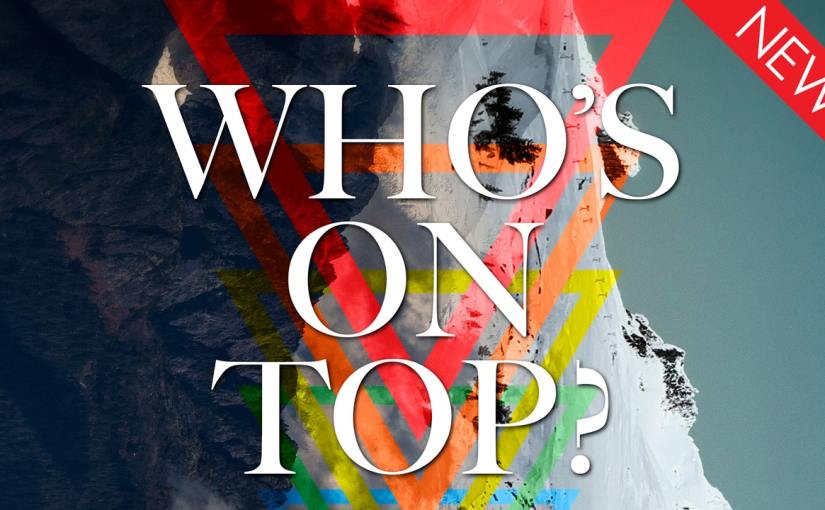
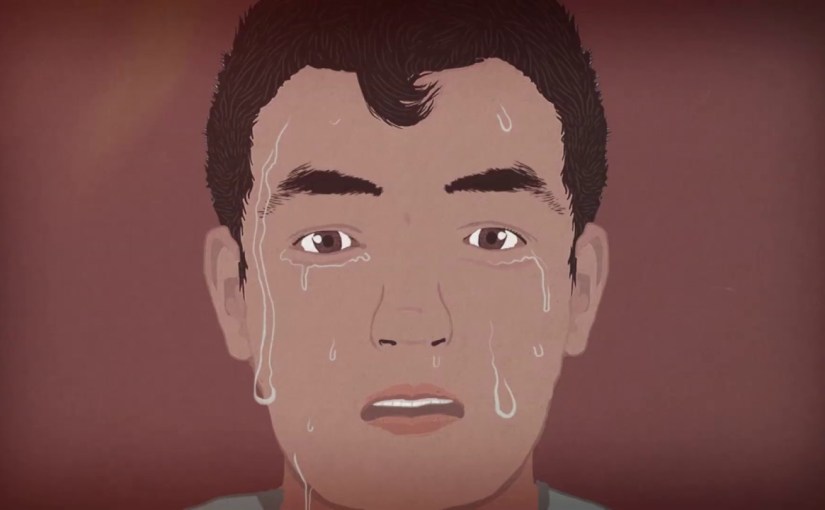
Who’s on Top is a new feature-length documentary which shines a spotlight on members of the LGBTQ community – including those with a range of mountaineering experience – who challenge stereotypes about gender and sexuality in the outdoor arena.

Historically excluded and ostracized as not belonging to the natural domain, the climbers will tackle not only a mountain, but assumptions about who they are and how they belong to the world of outdoor adventure.

Narrated by George Takei, Who’s on Top portrays a journey like no other, a never-before-told story about what makes LGBTQ folks both distinct and connected, facing physical, mental and societal obstacles.

Watch the trailer for Who’s on Top below. The film is now available on Dekkoo.

A baker seeks out the wife and son of his dead lover in this must-see drama The Cakemaker

Thomas (Tim Kalkhof) is a young German baker who is having a secret affair with Oren (Roy Miller), an married Israeli man who takes frequent business trips in Berlin.

When Oren dies in a car crash in Israel, Thomas travels to Jerusalem seeking answers regarding the untimely death of his lover. Under a fabricated identity, he infiltrates the life of Anat (Sarah Adler), Oren’s newly widowed wife, who owns a small cafe in downtown Jerusalem.

Thomas starts to work for her and create German cakes and cookies that bring life into her store. Thomas soon finds himself involved in Anat’s life in a way far beyond his anticipation – and to protect the truth he will stretch his lie to a point of no return.

An international hit when it was released in 2017, The Cakemaker earned glowing reviews from critics. The New York Times said “The Cakemaker believes in a love that neither nationality, sexual orientation nor religious belief can deter.”

Watch the trailer for The Cakemaker below. The film is now available on Dekkoo.

Short Film Spotlight: Touchscreen

Brian (Kelly Miller) drifts through life using a computer monitor as his window to the world outside. He hooks up with men online, remotes into his office, and FaceTimes with family, unable to connect meaningfully with the people on the other side of his screen.

After an online encounter with the charming Dom (Jose Joaquin Perez), Brian is faced with an unusual request: a virtual sleepover.

Brian succumbs to Dom’s proposition, and is transported (then spooked) by the sweet hints of intimacy that permeate the laptop screen.

Later, when Dom asks to meet him in person, Brian conjures an alternate reality; one in which he shatters his long-lived inhibitions to claim the warm touch of another human being. Dom persists until Brian replies: a small step for man – with momentous implications.

From writer-star Kelly Miller and Arthur Halpern, Touchscreen is a smart new short film about one man’s self-imposed isolation, and how the technologies and social platforms meant to connect us – to lovers, to family, to work – are misused to reinforce that isolation. The film was chosen as a selection at countless film festivals all over the globe.

Watch the trailer for Touchscreen below. The full 15-minute short is available now on Dekkoo.

Short Film Spotlight: Brothers

Winner of ten different jury and audience awards at various film festivals, the new short film Brothers follows a Muslim Arab boy who realizes he is different. Fortunately, he has an older brother who stands by him and encourages him to always be himself, even in the face of bias and adversity.

Written and directed by Mike Mosallam, the acclaimed filmmaker behind the series All-American Muslim and the recent gay romantic comedy hit Breaking Fast, this short film aims to shed light on LGBTQ+ oppression in a familial, religious space that has yet to be portrayed on screen.

Watch the official teaser trailer for Brothers below. The film is available now on Dekkoo.

Sorry Angel is a mature, deeply emotional reflection on love, loss, youth and aging

Paris, 1993. Jacques (Pierre Deladonchamps) is a semi-renowned writer and single father in his thirties trying to maintain his sense of romance and humor in spite of the turmoil in his life and the world.

While on a work trip to Brittany, he meets Arthur (Vincent Lacoste), an aspiring filmmaker in his early twenties, who is experiencing a sexual awakening and eager to get out of his parochial life. Arthur becomes instantly smitten with the older man.

From writer-director Christophe Honoré (Love Songs, Dans Paris) comes a mature and deeply emotional reflection on love and loss, and youth and aging.

In its intergenerational snapshot of cruising, courtship and casual sex – Jacques’ forty-something neighbor Mathieu (Denis Podalydès) rounds out the triumvirate – Sorry Angel balances hope for the future with agony over the past in an unforgettable drama about finding the courage to love in the moment.

Watch the trailer for Sorry Angel below. The film is now available on Dekkoo.

Director Omar Zúñiga talks The Strong Ones

Omar Zúñiga is an Audiovisual Director and B.A. in Aesthetics from Pontificia Universidad Católica de Chile, and also holds an M.F.A. from the Graduate Film Program at New York University, which he attended with scholarships from the Fulbright Program, Chile’s Ministry of Education and Tisch School of the Arts.

He directed Academy Award® nominee James Franco and Zach Braff in a segment of the film The Color of Time. He premiered his short San Cristóbal at the Berlinale in 2015, where it won Teddy Award for the Best Short Film.

His first feature, The Strong Ones, received both the Grand Jury Prize for Best International Narrative and the Audience Award at OutFest Los Angeles 2020.

The Strong Ones is now available on Dekkoo. Here’s some of what Zúñiga had to say about the film below.

What was the starting point for The Strong Ones?

I started writing in 2014. At that moment, I was living in the United States. I had directed various projects in English, and at that moment I strongly felt the need to make something that was much closer to my life experiences, to the culture I know, to the kinds of characters and lives that I wanted to represent. I wanted to tell a love story that was romantic and genuine, honest with the things that I know and that I have seen around me.

I also wanted to make a film that was current and political, in which these two men will not let themselves be pushed over by any hostility they may find around them, in which they are able to fight for their place in the world, for the dignity that they define for themselves. This hostility does not define them, their humanity does. The ways that they are different from each other, the ways in which they both try to get to another stage of their adulthood. For me, the film is a romance and also a coming of age, in which they both take risks, and in which they take steps to their own independence.

Films working on same sex relationships sometimes do it from the violence, the discrimination, the pain. What motivated you to take it from love? What difference does The Strong Ones have with other romantic films?

In a very deliberate way, when we had the chance to make this film, we wanted to focus our resources, our talents, our light, in telling a story that celebrated this love and the bravery these two characters have in front of the world, in a way that I have not seen enough of. Homophobia exists in Chile; it is brutal and painful. There are macabre attacks periodically, and there is still a social dimension to it as well. However, our focus is not on this violence, and in my opinion, the film presents in a plausible and realistic way the different reactions that they face around them: sometimes clumsy rejection, sometimes unconditional support, sometimes the town’s anonymous hostility. I feel that this is honest with our country in this moment in time and with the experiences that I know.

I also wanted to talk about a love that had no reservations. It is not a story of discovery, it is a love story that does not involve the idea of guilt, the idea of what they are doing is wrong. It does not cease to surprise me how many films that revolve around same sex relationships fall time and time again in the pattern of one the participants thinking or feeling that what they are going through is something that must be hidden. Even films that are received by mainstream audiences. This is ethically foul for me, and we wanted to remove ourselves from that. I wanted to celebrate their freedom, their autonomy, the courage they have when they allow themselves to be vulnerable with one another.

Finally, I also think that we are unconsciously trained by narrative conventions to expect epic narratives about love, where people leave everything behind for it. I wanted to tell a different story in this sense, more adult, closer to life, with a love that has other ways of being epic.

How was the casting process?

When I started writing the film I wanted to work with Antonio Altamirano: we had met years prior because we had made our first short film together, me as a director and him as an actor. There is a feeling of resilience and strength in Antonio the character, who is very clear with what he thinks, with defending his way of looking at the world. I am not sure why exactly, but I was confident that Antonio could bring this to the screen.

For the other character, Lucas, I was not so sure. It is a more mysterious character, who leaves some of his own shortcomings behind during the film. A common friend introduced me to Samuel González, and when we met, we connected very quickly, we talked about many things beyond the story in particular. We realized that in many ways, the film was as personal to him as it was to me, with experiences that we had both lived. I was very interested in that, and it made us trust each other profoundly.

We did not do formal auditions. For me, it was about the person behind the actor: the experiences that shape us as human beings, the things we have lived or the things we think about the world. I believe that inevitably that makes it to the screen somehow. With Marcela Salinas and Rafael Contreras, it was a similar process, and also with other actors that are featured.

Why did you choose the south of Chile as the context?

From the beginning I wanted the film to have that atmosphere, defined by the immensity of the ocean, and the omnipresence of the rain, the water and the forests. In the Corral Bay in particular there is also a system of Spanish forts that were key in the conquest period, and that centuries later were a part of the independentist movement. These buildings have been standing for centuries, resisting the waves crashing against them. I see them as a vestige of resilience, and in way this echoes the relationship between Lucas and Antonio, who have to resist other kinds of waves.

Also, I was interested in a very specific culture: the local fishing, marked by the dignity of the trade, by the stoicism and the fortitude, by the pride that a community has for the life it leads. This is embodied by Antonio, who defends his side of the river, his way of looking at the world, the life he chooses to carry. I think that sometimes there is a paternalistic view of the trades, or of the hostility: if you find it, change the life you have. I wanted to defend a different notion, conscious of dignity, conscious that all of us deserve to live the life we want in the place where our affections exist.

I spent a lot of time in the area in different occasions before the shooting, observing, visiting places and getting to know people. I wanted to make a portrait that felt authentic. I believe that the process previous to filming, which was years, was key for that.

Don’t miss the award-winning romance The Strong Ones

Based on the original short film San Cristóbal, which won the Teddy Award at the Berlin International Film Festival in 2015, writer-director Omar Zúñiga Hidalgo’s The Strong Ones tells a moving story of love and bravery at the end of the world.

Lucas (Samuel González) travels to visit his sister in a remote town in southern Chile. In front of the ocean and the fog, he meets Antonio (Antonio Altamirano), a boatswain in a local fishing crew.

When an intense romance grows between them, their strength, their independence and their adulthood become immovable in front of the tide.

Winner of the Grand Jury Prize for Best International Narrative Feature and the Audience Award for Narrative Feature at OutFest Los Angeles in 2020, The Strong Ones is a film about two young men who are looking for their place in the world, that celebrates the love that they live, without reservations. It is also a political gesture, that talks about their freedom, their autonomy, and their resilience.

Watch the trailer for The Strong Ones below. The film is now available on Dekkoo.

A Filipino teen gets dangerously close to two half-American brothers in 2 Cool 2 Be 4Gotten

Felix Salonga (Khalil Ramos) is a friendless teenager from a poor background. His life is pretty much devoted to becoming the top of his class, thereby elevating his status.

Meanwhile, the handsome yet mysterious Magnus and Maxim Snyder (Ethan Salvador and Jameson Blake), half-American brothers, want nothing more than to escape from their life the Philippines and live in the USA.

As Felix develops a relationship with the brothers, he unearths desires within him that lead to unexpected and dangerous consequences.

Fresh, daring and playful 2 Cool 2 Be 4Gotten marks the promising directorial debut of Filipino director Petersen Vargas, an exciting new voice in Pinoy cinema.

Watch the trailer for 2 Cool 2 Be 4Gotten below. The film is now available on Dekkoo.