

‘Brothers of the Night’ arrives on Dekkoo this month!
Category: Documentary

New This Week – 8/18/17
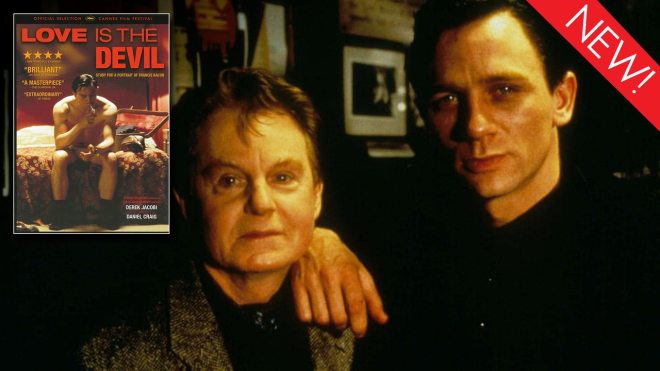
Writer-director John Maybury’s ‘Love is the Devil‘ offers a searing portrait of English painter Francis Bacon (Derek Jacobi). The film focuses on his tumultuous relationship with George Dyer (Daniel Craig), a younger small-time thief who Bacon treats as both rough trade and the ultimate artistic muse.

Torn between two loves, a young man struggles to understand and accept his own desire. Watch ‘Amias’ now on Dekkoo!

The worlds of a former neo-Nazi and the gay victim of his senseless hate crime attack collide by chance 25 years after the incident that dramatically shaped both of their lives. They proceed to embark on a journey of forgiveness that challenges both to grapple with their beliefs and fears, eventually leading to an improbable collaboration…and friendship. ‘Facing Fear‘ was a nominee for the 86th Academy Awards in the Best Documentary Short Subject category.
___________________________
Coming next week: An achingly romantic new indie from a Filipino auteur!
New This Week – 8/11/17

Winner of the coveted Teddy Award for Best LGBT Feature at the Berlin International Film Festival, this provocative drama follows Andreas and Stefan, a gay couple whose happy life together is shaken to the core after an unexpected and inexplicable outburst of violence. ‘Tomcat’ is now available on Dekkoo!

Connor is going to kill himself. But first, he’s throwing a going away party to say goodbye to all his friends. Problem is, he doesn’t seem to have any friends. Watch ‘The Going Away Party’ now available on Dekkoo!

‘Trip to Hell and Back‘ is a documentary follows the true story of Trip Harting, one of the most famous horse riders in the United States who led a double life as one of the largest meth dealers in Washington DC’s gay underground drug scene.
________________________________
Coming next week: James Bond himself, Daniel Craig, bares his body and soul in this twisted portrait of a tortured real-life artist.

DEKKOO DISPATCH 028 – ‘VITO’
Title – ‘Vito‘
Director – Jeffrey Schwartz
Release Date – 2011
______________________
Today we at Dekkoo are paying tribute to Vito Russo: activist, author, academic, film fanatic, and most importantly a friend and father-figure to every LGBTQ member of our community. Jeffrey Schwartz’s 2011 film ‘Vito‘ is a stirring tribute to this legendary trailblazer of queer cinema and HIV/AIDS activism.
Growing up and browsing the shelves at Blockbuster I’d always walk by a tattered old looking DVD entitled ‘The Celluloid Closet’. Once I finally had made my way through most of the sexy films I’d been dying to rent I finally checked it out one night. The amount of queer stories that had to be hidden underneath various guises through time was sobering of what I had been accustomed to given my young age. ‘The Celluloid Closet’ was based on Vito Russo’s novel of the same name published in 1981 with the subtitle “Homosexuality in the Movies”. It woke people up to queer tropes like the predatory lesbian and the sissy homosexual. Vito truly believed that these tropes were perpetuating the oppression of gay people and that media needed to change in order for society to change. Vito wasn’t just sitting at home writing though. He went on college tours lecturing about his work and about queer cinema in general.
After publishing ‘The Celluloid Closet’ Vito Russo went on to form the Gay and Lesbian Alliance Against Defamation. That’s right, Vito Russo formed GLAAD! They’re the ones that to this day keep a very close eye on everything happening in media around the world and hold them accountable for their actions. And as much as I get annoyed with how much they hit me up for cash, they’ve done some great stuff like issuing a Studio Responsibility Index that ranks the major Hollywood studios by the quantity, quality, and content of LGBTQ representation in the films they produce.
Vito also left a big imprint on HIV/AIDS activism in the 80s through his involvement in the Gay Activists Alliance & ACT UP, his creation of a gay TV series called ‘Our Time’, and his participation in the 1989 Academy Award-winning documentary ‘Common Threads: Stories from the Quilt’. He told the story of his lover Jeffrey Sevcik who passed away from his battle with AIDS. The directors of ‘Our Time’ are Rob Epstein & Jeffrey Friedman. Besides directing masterpieces like ‘The Times of Harvey Milk’ and ‘Word is Out’ they also were the ones to lovingly direct ‘The Celluloid Closet’ after Vito had passed away from his own battle with AIDS.
I’ve left you with a very basic skeleton of what Vito Russo did with his life, but when you watch ‘Vito‘ you’ll actually see his whole body and hopefully see even deeper.
____________________________
Watch it with: A group of friends who appreciate gay heroes!
Mix it with: Beers!
____________________________

DEKKOO DISPATCH 009 – ‘BORN THIS WAY’
Title – ‘Born This Way‘
Director – Shaun Kadlec, Deb Tullmann
Release Date – June 21, 2013
_________________________________
I really love it when there’s a queer documentary I’ve never heard of that can blow me away with it’s absolutely universal message of the importance of acceptance from places I’m completely unfamiliar with, like Cameroon. I didn’t even know where Cameroon was in Africa before watching this doc (FYI it’s on the west coast just to the east of Nigeria). ‘Born This Way‘ premiered at the Berlin Film Festival and continued on to win Best
Documentary at Outfest Los Angeles back in 2013.
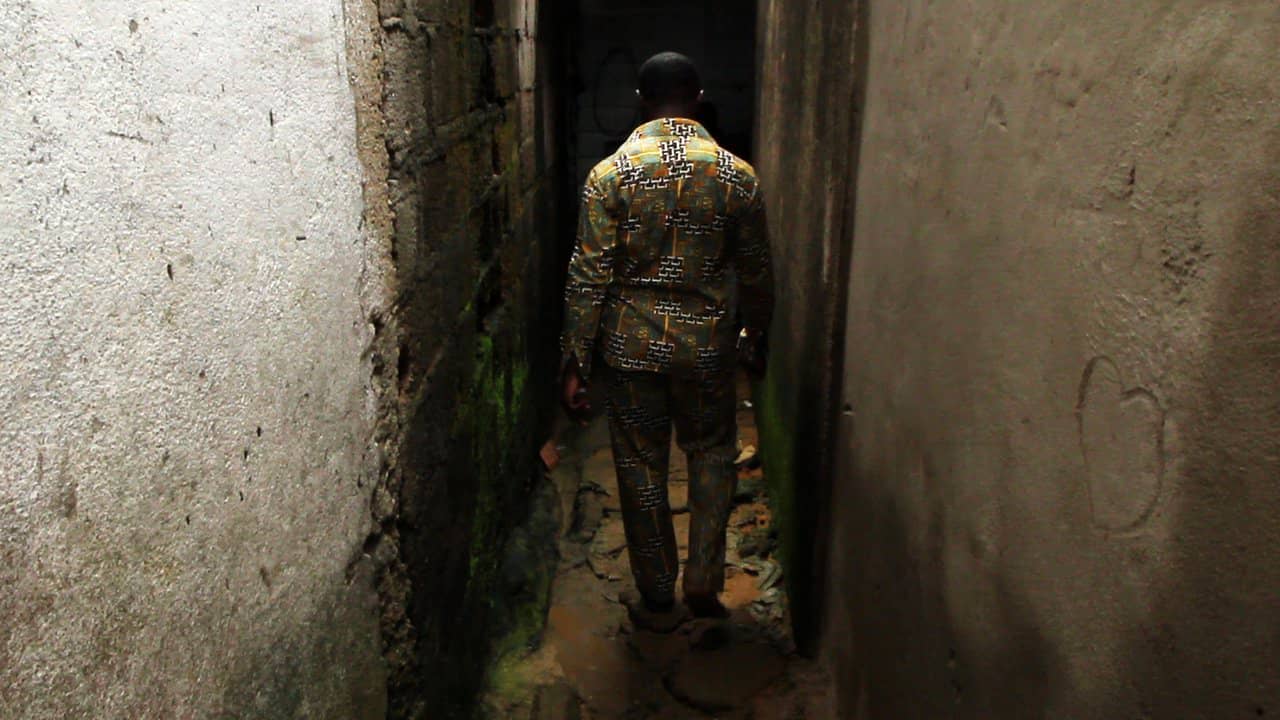
In Cameroon it’s still completely illegal to be ‘out and proud’. In fact it’s illegal to even be ‘out’. Same-sex sexual activity is punishable by either a fine and 5 years imprisonment and what’s even worse is that vigilante execution is technically allowed by law. Cameroon also boasts the scary statistic of the most arrests related to homosexuality than any other country in the world! Of course even though the situation is extremely grim, there’s a ray of light; Alternatives, the first LGBT center in Cameroon. Though many of the chosen subjects have to convey their stories in shadows or with blurred
faces you’ll still feel the power of their stories of persecution and their hopes for the future.
Also a plus: this doc is only 55 minutes, so your time will be well spent!
‘Born This Way’ is now available to watch on Dekkoo!
___________________________________________
Watch it with: Your politically-minded friends
Mix it with: Cardamom Tea (Popular in Cameroon!)
___________________________________________

Elizabeth Gracen, director of The Damn Deal, interview.
Have you watched The Damn Deal on Dekkoo yet? It’s a captivating, beautifully lit and shot black-and-white documentary about identity and what it was like to grow up gay in the South at the end of the 20th century. Originally shot in 1997, filmmaker, writer and former Miss America, Elizabeth Gracen, interviewed three young female impersonators who competed in the Miss Gay America Pageant.
In anticipation of the 44th Miss Gay America pageant happening in Memphis from October 5 – 9, Elizabeth Gracen talked about the making of The Damn Deal. It’s a wonderful interview we thought you might like to read.

Miss America 1983 Elizabeth Gracen. Photo by Emma Bogren.
‘My brother was a huge football star and now with me in competition in pageants, that’s my football – that’s me being a football star. I’m just a beautiful football star.”
– Spencer May/Kelly Cruise, Miss Gay Arkansas America 1993, from ‘The Damn Deal’ (1997)
In 1997, filmmaker, writer and former Miss America, Elizabeth Gracen, interviewed three young female impersonators who competed in the Miss Gay America Pageant system for her captivating, beautifully lit and shot black-and-white documentary “The Damn Deal” (Flapper Films). The recovered, original footage, now restored, explores gender, identity and what it was like to grow up gay in the South at the end of the 20th century.
Crowned Miss America in 1982, Gracen (Elizabeth Ward at the time) went on to study acting, pose on the cover of Playboy, star (as Amanda) in the Nineties TV series “Highlander,” and established her own film production company (Flapper Films) and boutique publishing company (Flapper Press). She recently filmed actress Lee Meriweather for a documentary short and in March released her first Young Adult fantasy novel, “Shallily.”
In anticipation of the 44th Miss Gay America pageant happening in Memphis from October 5 – 9, Gracen talks about the making of “The Damn Deal.”
What initially inspired you to make “The Damn Deal�
I had the good fortune to meet Spencer May and Michael Thornberry (two of the stars of “The Damn Deal” at a hair salon in Little Rock, Arkansas. I think it was Michael who told me about the local female impersonator pageant. They took me along to the pageant at the Discovery nightclub, and I was allowed to stay backstage as the contestants got ready for competition. I remember sitting in the corner, fascinated with their process. I don’t know what they thought about a former Miss America “spying” on them!
Not long after that, I had the idea to capture Spencer on camera as he morphed from male to female as I asked him questions about his life and experience in the world of female impersonation and pageants. I met Stan Ferguson around that time as well. Sadly, he passed away about two months after we filmed. Michael Thornberry joined on shortly after that.
You judged a Miss Gay Arkansas America pageant. What was your impression?
I think Spencer May got me the gig of judging the Miss Gay Arkansas pageant. It was a wonderful time! I’d never seen anything like it. Back then, I had no idea that there was such a vibrant female impersonator venue in Arkansas. I mean, come on! – Arkansas is smack dab in the Bible Belt! I think that the Discovery nightclub still hosts fabulous shows, but back then… I just think it is amazing that the place existed at all!
Though Miss Gay America is based on the Miss America pageant system, these are men impersonating women. Aside from the obvious differences, what struck you the most? At the time I shot the film, I had been away from the pageant world for quite some time. I was questioning the value of women having to compete with each other to wear a crown. The world of the Miss Gay America system has its parallels, but I think the process is much more exact and arduous. The dedication it takes to bring a “creation” to life takes focus, passion and sense of fun. I think it is a much more difficult endeavor than what I had to go through when I competed. I really admire what they do and the artistry it takes to bring their “creations” to life.

And what did you find similar to Miss America about MGA?
Well, these guys are definitely “in it to win it†when it comes to competition. That is very similar to what I experienced when I was involved in the pageant world in the early 1980s. Obviously, the theatricality is enhanced – the makeup, hair and flamboyant aspect to the performances. However, I think the MGA system hits all the same points when it comes to the attention to detail and the desire to be the “best you can be” at what you are trying to achieve. Honey, they all want that crown!
Many of the men talk about how impersonating a strong woman, inventing a new self, has empowered them. Did you find–for you personally or other women–that competing in the Miss America system was the same kind of empowering experience?
I think that the whole female impersonation pageant experience is very different than what a young woman experiences during her pursuit in the pageant world. For men, I see it as a grand experiment–very artistic and full of humor and curiosity. They are empowered by that experimentation, and I think it kicks it up a notch for them to compete with each other. They really seem to be having fun, and they want to put on a great show for the audience.
For women, or at least with my experience in the pageant system, it involves a different aspect of “facade.” I was only 20 when I won Miss America. I’m from a small town in Arkansas, and I’d been on an airplane only one time before I arrived in Atlantic City. I was very focused and determined, but I had no idea, really, about who I was. It was more about being perfect. There was no experimentation – it was all about conforming to the Miss America ideal. No one told me that Miss America was a persona – “that I didn’t have to actually be perfect. I bought into the whole thing and really tried to be something impossible. It took me years of therapy to recover and just be myself!
Did you get a sense from these three men that being in the Miss Gay America pageant system was a bonding experience or purely competitive?
There must be a little of both when it comes to the men who compete in the MGA system. My experience with their world is pretty limited, but I assume that, just like in the women’s version of pageants, there is a little of everything going on! Competition, bonding, frustration, cattiness…I’m sure it is all there during the process.
Up until this past year, I had been away from the Miss America system for a very long time. I’ve had no interest, other than watching the pageant on television, in being involved with it. It is frustrating to me that women have to compete in swimsuits for a scholarship prize. It doesn’t make sense to me. I think it’s an outdated concept and one that I don’t support. There should be better ways of providing educational scholarships to young women.
However, just this past year, I’ve become friends with a group of former Miss Americas. We had a wonderful rendezvous in the Santa Barbara wine country. I got to know them – we got to share our strange, mutual experience of wearing the crown and what that year entailed for us. We are all very different, and our lives have taken divergent paths, but we still share that one experience. The stories of how we got there, how we felt about ourselves and how it changed our lives are all very different as well. It was one of the best weekends I have ever spent. I’ve made friends that I will have for the rest of my life.
Did you ever see the rule book for Miss Gay America? Or Job Summary? Is there is a similar rule book for Miss America?
Wow! I just took a quick look at the rulebook for the MGA pageant. Ha! I am sure that there is something similar for the Miss A Pageant, but I don’t think that “deductions” really play a big part in the process. Miss America is more about awarding points than deducting points. That speaks to the main difference in the two pageant systems. The MGA system is all about creating the “illusion” of a woman – that entails artistry in the creation. The Miss America Pageant is more about presenting the best “you” – the most “ideal.” I’m not saying that the latter doesn’t involve skill or talent, but it is not the same objective as the MGA system.
Female impersonators and drag queens know all the tricks. Did you every pick up a beauty secret or tip from these guys or any female impersonator/drag queen?
If you see “The Damn Deal,” you’ll see that its primary goal is to pull back the curtain on the artistry of creating the illusion of “female.” The makeup and body tricks are fascinating and informative to anyone interested in theatrical makeup and presentation.
 Discover great gay stories.